¿CULTURA O VANDALISMO? LA EXPOSICIÓN QUE TE HARÁ CAMBIAR DE OPINIÓN SOBRE EL ARTE URBANO
Actualizado: 9 abr

Confieso algo: durante años fui de esas personas que veía una fachada pintada y pensaba "qué manía de ensuciar". Pero este finde, por insistencia de una amiga, me planté en la Fundación Canal para ver la muestra de Arte Urbano. De los orígenes a Banksy, y salí con una pregunta dando vueltas en la cabeza: ¿por qué llamamos "vandalismo" a lo que en realidad es la voz de quien no tiene altavoz?
Ahora, el arte que nació en los vagones del metro de Nueva York cuelga con orgullo en espacios de lujo, y Madrid tiene la cita perfecta para comprobarlo.
I have a confession: for years, I was one of those people who saw a painted facade and thought, "what a mess, why do they have to ruin everything?" But this weekend, after a friend insisted, I went to Fundación Canal to check out the exhibition "Arte Urbano. De los orígenes a Banksy"(Urban Art. From the Origins to Banksy). And I walked out with one question stuck in my head: why do we call it "vandalism" when sometimes it's just the voice of someone who doesn't have a microphone?


De aquellos tags de los 70 a mi móvil lleno de fotos
Nada más entrar, la exposición te atrapa con un montaje que no es nada pretencioso. Está pensado para que lo entiendas aunque no sepas nada de arte. Y ahí empieza la magia: ves cómo unos chavales del Bronx de los años 70, con una lata de spray y un pulso firme, convirtieron las paredes de los vagones de metro en su particular periódico.
Me quedé clavado viendo los bocetos de TAKI 183. Este tío era un repartidor de mensajería que, mientras curraba, se dedicaba a firmar por toda Nueva York. Se hizo tan famoso que hasta The New York Times le dedicó un artículo. Y yo pensando: "joder, es como si un cartero de mi barrio se convirtiera en leyenda urbana solo con su nombre". Eso me hizo ver que el arte urbano, en el fondo, es una necesidad brutal de decir "existo".
From Those 70s Tags to My Phone Full of Photos
Right from the entrance, the exhibition grabs you. It's not pretentious at all. It's designed so you can understand it even if you know nothing about art. And that's where the magic begins: you see how a bunch of kids from the Bronx in the 1970s, with just a spray can and a steady hand, turned subway car walls into their personal newspaper.
I got completely stuck staring at the sketches of TAKI 183. This guy was a messenger delivery boy who, while working, would tag his name all over New York City. He became so famous that even The New York Times wrote an article about him. And I thought: "damn, it's like a mailman from my neighborhood becoming an urban legend just by writing his name." That made me realize that street art, at its core, is a brutal need to say "I exist."


Basquiat, Haring y ese rollo que tanto me gusta
Luego llegas a la sala de los 80 y aquí es donde flipé. Jean-Michel Basquiat y Keith Haring están presentes con obras que no son las originales de las galerías neoyorquinas (eso sería imposible), pero sí con litografías y serigrafías que transmiten esa energía cruda. Ver a Basquiat, con esos trazos que parecen hechos con rabia y prisa, te recuerda que el arte puede ser elegante y sucio a la vez.
Y Haring… madre mía. Sus muñecos bailando, ese bebé que irradia luz, los perros ladrando. Me di cuenta de que esos iconos los he visto toda la vida en camisetas de Zara y en posters de tiendas molonas, pero nunca supe que eran la firma de un tío que murió por el sida y que usaba el arte para hablar de amor, muerte y política sin decir ni una palabra. Ahí me sentí un poco analfabeto cultural, para qué negarlo.
Basquiat, Haring, and That Vibe I Love So Much
Then you get to the 80s room, and this is where I freaked out. Jean-Michel Basquiat and Keith Haring are there. You won't see their original gallery pieces from New York (that would be impossible), but there are lithographs and serigraphs that still carry that raw energy. Seeing Basquiat, with those strokes that look like they were made with anger and urgency, reminds you that art can be elegant and dirty at the same time.
And Haring… oh my god. His dancing figures, that radiant baby, the barking dogs. I realized I've seen those icons my whole life on Zara t-shirts and in cool store posters, but I never knew they were the signature of a guy who died of AIDS and used art to talk about love, death, and politics without saying a single word. I felt a bit culturally illiterate, not gonna lie.


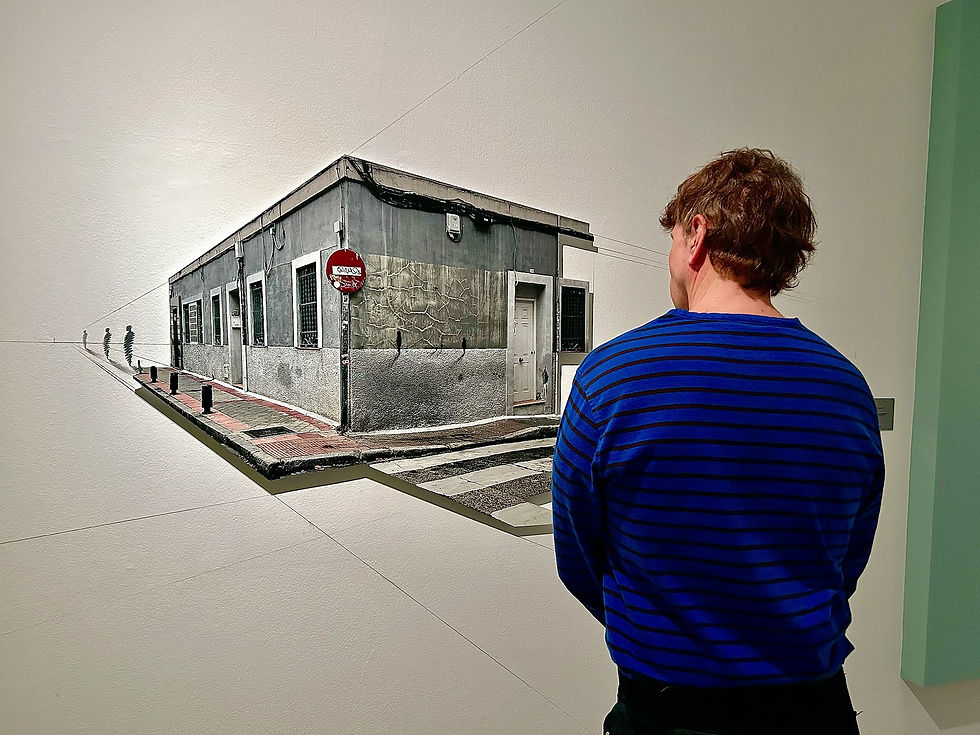

El momento Banksy: humor, ternura y un golpe en la mesa
Vale, vamos a lo que a todos nos interesa. La sala de Banksy es pequeña pero intensa. Tienen reproducciones de sus obras más famosas, claro (porque ya se sabe que Banksy no se deja atrapar fácilmente), pero la calidad es tan buena que casi parece que las hayas visto en la calle.
Niña con globo me dio una pena preciosa. Esa niña pequeña estirando el brazo hacia ese corazón rojo que se escapa… es una metáfora perfecta de estos tiempos: siempre queriendo alcanzar algo que parece estar ahí pero se va volando. Y luego está la versión que hizo de Los chicos malos de Tarantino, pero con plátanos en lugar de pistolas. Me reí a solas. Es Banksy en estado puro: te hace gracia y a los dos segundos te das cuenta de que te está diciendo que preferimos un plátano ridículo a una pistola, pero seguimos eligiendo la violencia.
The Banksy Moment: Humor, Tenderness, and a Punch on the Table
Okay, let's get to what we all care about. The Banksy room is small but intense. They have high-quality reproductions of his most famous works (because, as we know, Banksy doesn't let himself be caught easily), but the quality is so good you almost feel like you saw them on the street.
Girl with Balloon gave me a beautiful, bittersweet feeling. That little girl reaching out for that red heart floating away… it's the perfect metaphor for these times: always trying to reach something that seems right there but keeps drifting off. And then there's his version of Tarantino's Reservoir Dogs, but with bananas instead of guns. I laughed out loud. That's pure Banksy: he makes you laugh, and two seconds later you realize he's telling you that we'd rather have a ridiculous banana than a gun, but we still choose violence.


El debate que te remueve: ¿arte o vandalismo?
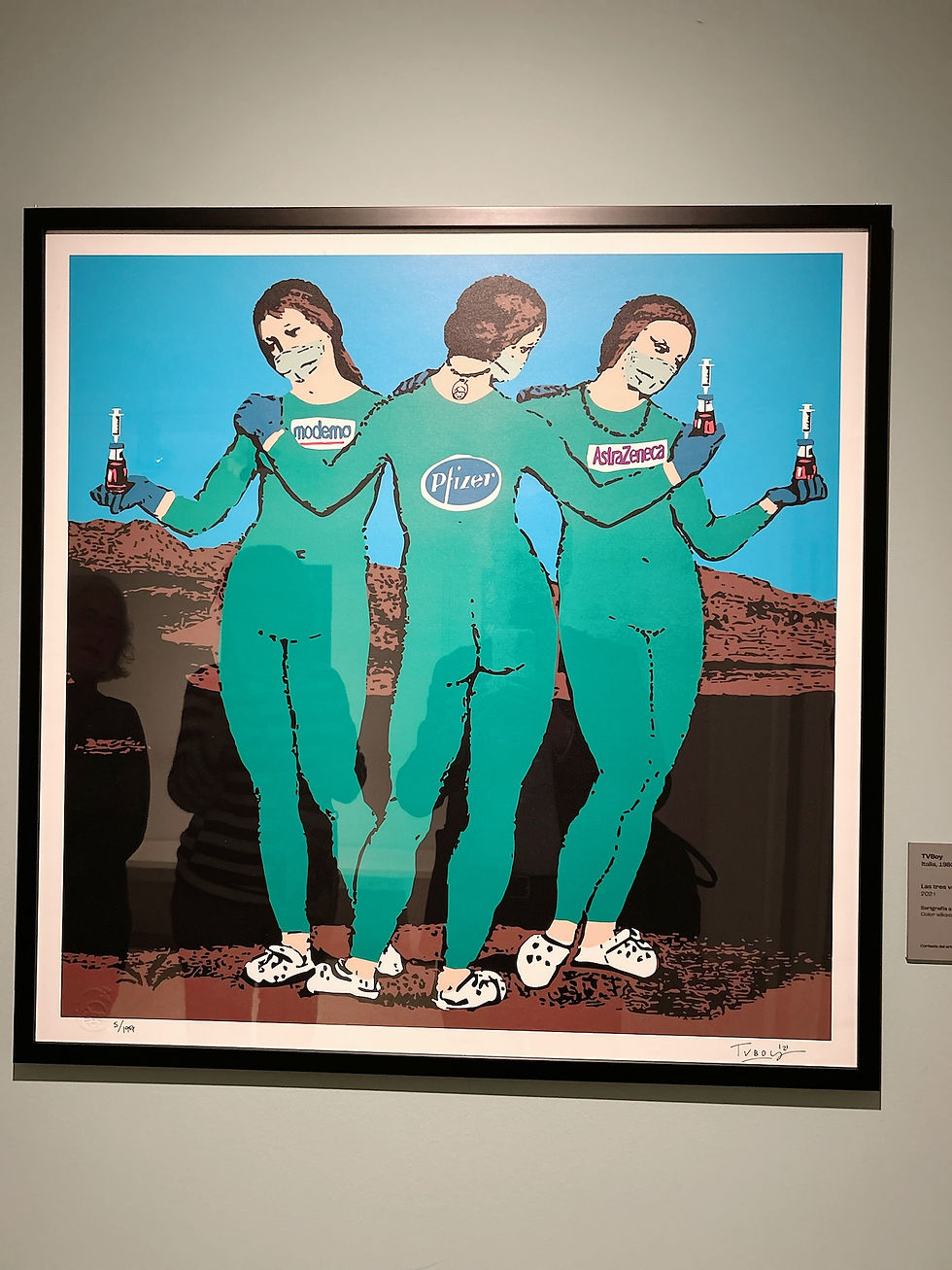
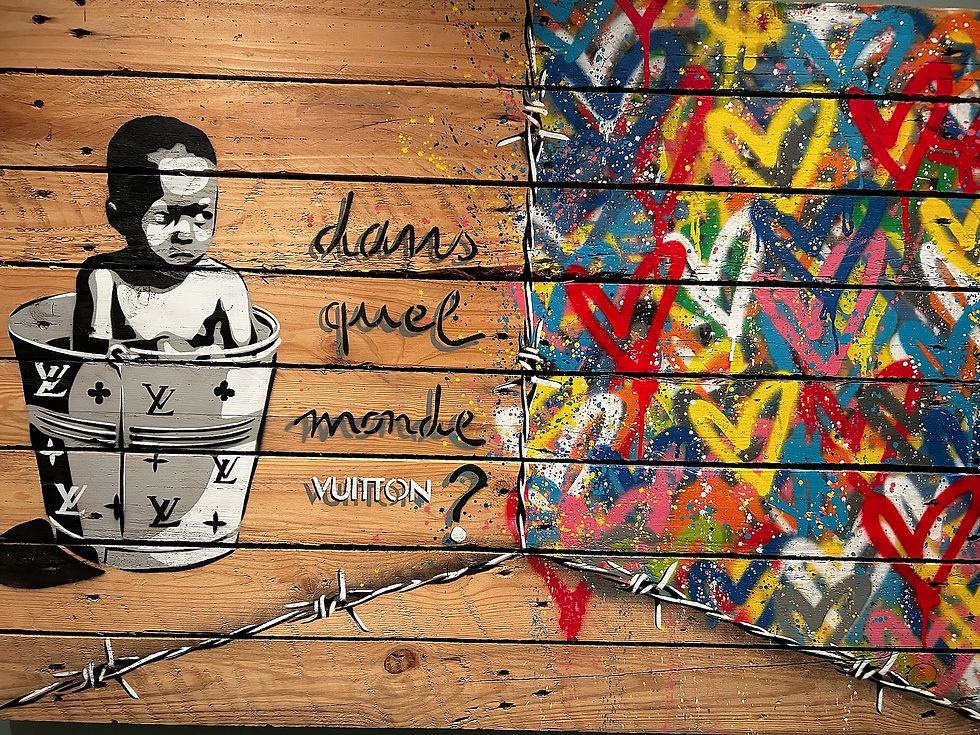
Aquí viene lo mejor, y lo más incómodo. La exposición te planta al final una pared llena de ejemplos reales de intervenciones en patrimonio histórico. Hay una foto de una pintada en la Catedral de Santiago, otra de un edificio protegido de Madrid con un tag enorme. Y justo al lado, las mismas firmas pero en un lienzo dentro del museo.
Me quedé un buen rato ahí, con las manos en los bolsillos, dándole vueltas. Porque yo mismo he mirado mal a quienes pintan contenedores en mi calle. Pero también he llorado con un mural de un artista local que pintó la historia de las lavanderas del barrio. Al final, creo que la diferencia no está en la lata de spray, sino en el porqué y el dónde. Pero eso ya lo decide cada uno.
The Debate That Shakes You: Art or Vandalism?
Here comes the best part, and the most uncomfortable one. The exhibition puts up a wall full of real-life examples of interventions on historical heritage. There's a photo of a tag on the Santiago de Compostela Cathedral, another one of a protected building in Madrid with a huge graffito. And right next to them, the exact same tags but on a canvas inside the museum.
I stood there for a good while, hands in my pockets, thinking. Because I myself have looked down on people who paint dumpsters on my street. But I've also cried in front of a mural by a local artist who painted the history of the neighborhood's laundry women. In the end, I think the difference isn't in the spray can, but in the why and the where. But that's for each of us to decide.



Mi consejo (por si te animas)
Si quieres ir, la exposición está en la Fundación Canal (junto a Plaza de Castilla), es gratis y está hasta el 3 de mayo. Los horarios son de martes a domingo de 11 a 20h (los miércoles cierran a las 15h, ojo). Mi recomendación: ve un martes por la tarde, que hay menos gente, y tómate tu tiempo en la sala final. No tengas prisa por salir. Luego, a la salida, te mereces un café en cualquier terraza de la zona para seguir dándole vueltas a eso de si el arte debería estar siempre enmarcado o puede ser libre y fugaz como un spray sobre el asfalto.
Yo salí con el móvil lleno de fotos y la cabeza llena de preguntas. Y la verdad, hacía tiempo que una exposición no me removía así. Así que ya sabes, si quieres un plan diferente, que mezcla calle, historia y mucha actitud, ya tienes cita. Nos vemos allí.
My Advice (In Case You Want to Go)
If you want to go, the exhibition is at Fundación Canal (next to Plaza de Castilla in Madrid), it's free, and it runs until May 3rd, 2026. Opening hours are Tuesday to Sunday from 11 AM to 8 PM (Wednesdays they close earlier, at 3 PM). My recommendation: go on a Tuesday afternoon when it's quieter, and take your time in the final room. Don't rush to leave. Afterwards, treat yourself to a coffee on any terrace in the area to keep thinking about whether art should always be framed or if it can be free and fleeting, like spray paint on asphalt.
I left with my phone full of photos and my head full of questions. And honestly, it's been a while since an exhibition moved me like that. So there you go: if you want a different kind of plan, one that mixes street culture, history, and a lot of attitude, you've got a date. See you there.

LLevo puesto una camiseta a rayas de PRADA, jeans de BALENCIAGA y sneakers de ZARA
I'm wearing a striped PRADA T-shirt, BALENCIAGA jeans and ZARA sneakers


Comentarios