EL ARCHIVO AFECTIVO DEL CINE LGTBIQ+ LLEGA A LA FIAMBRERA ART GALLERY DE LA MANO DE ANTONIO UFARTE
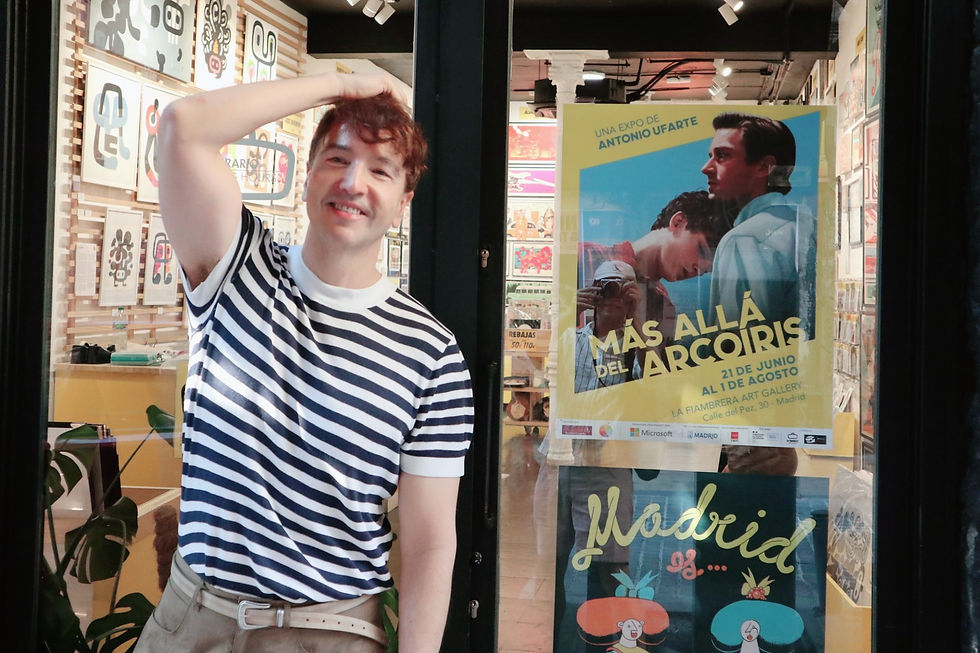
Hay exposiciones que te reciben antes de que hayas cruzado del todo la puerta. No es la luz, ni el montaje, ni el olor peculiar de ciertos espacios expositivos. Es otra cosa. Algo que se mueve en el pecho con la familiaridad tranquila de un recuerdo que no sabías que seguías cargando.
Eso pasa en La Fiambrera Art Gallery con Más allá del arcoíris, la nueva muestra del ilustrador y cineasta Antonio Ufarte. Entras, y en algún lugar dentro de ti algo dice: ah, sí. Esto.
There are exhibitions that welcome you before you've fully walked through the door. It's not the lighting, or the layout, or the particular smell of certain gallery spaces. It's something else. Something that stirs in your chest with the quiet familiarity of a memory you didn't know you were still carrying.
That's what happens at La Fiambrera with Beyond the Rainbow, Antonio Ufarte's new show. You walk in, and somewhere inside you something says: oh, yes. This.
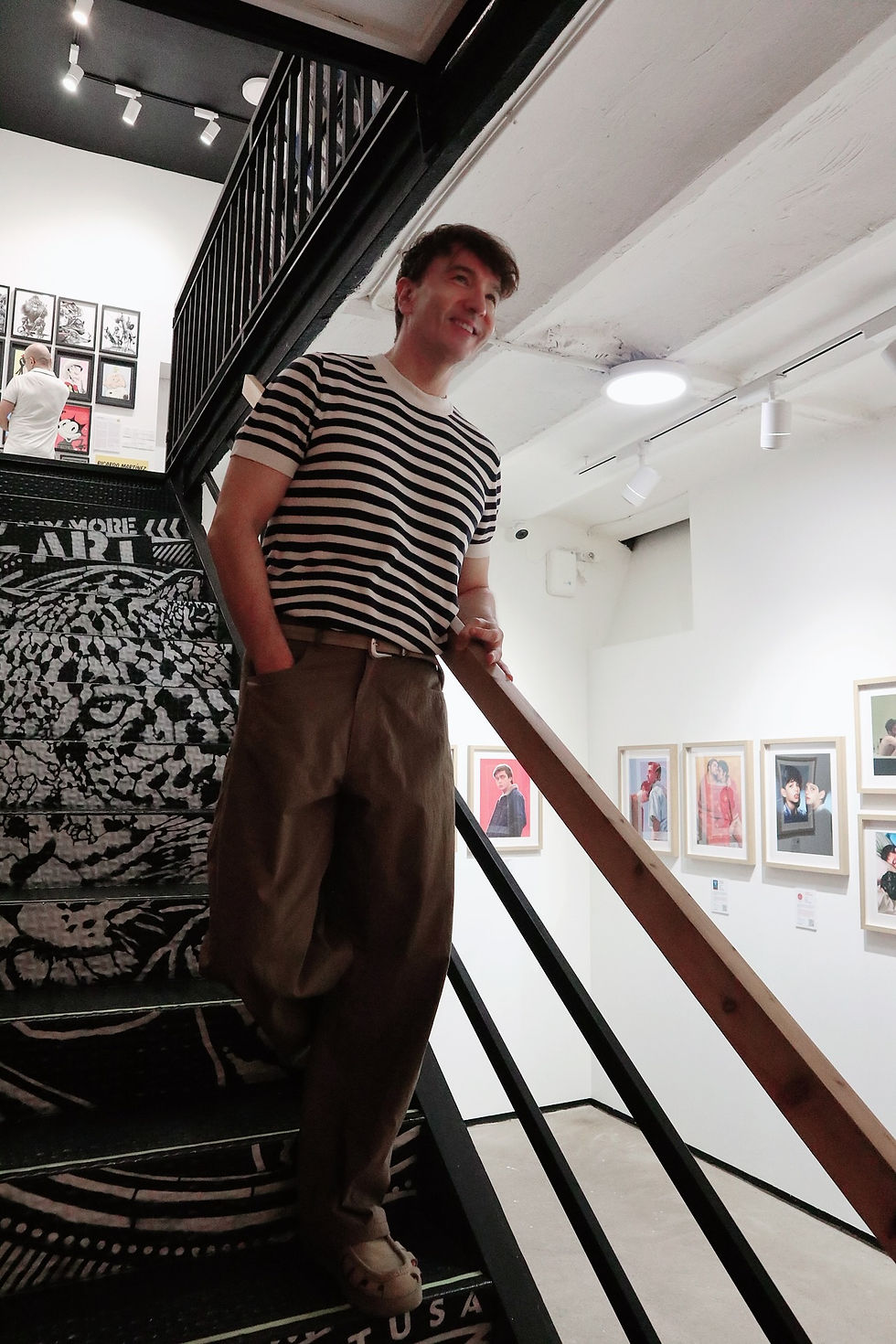


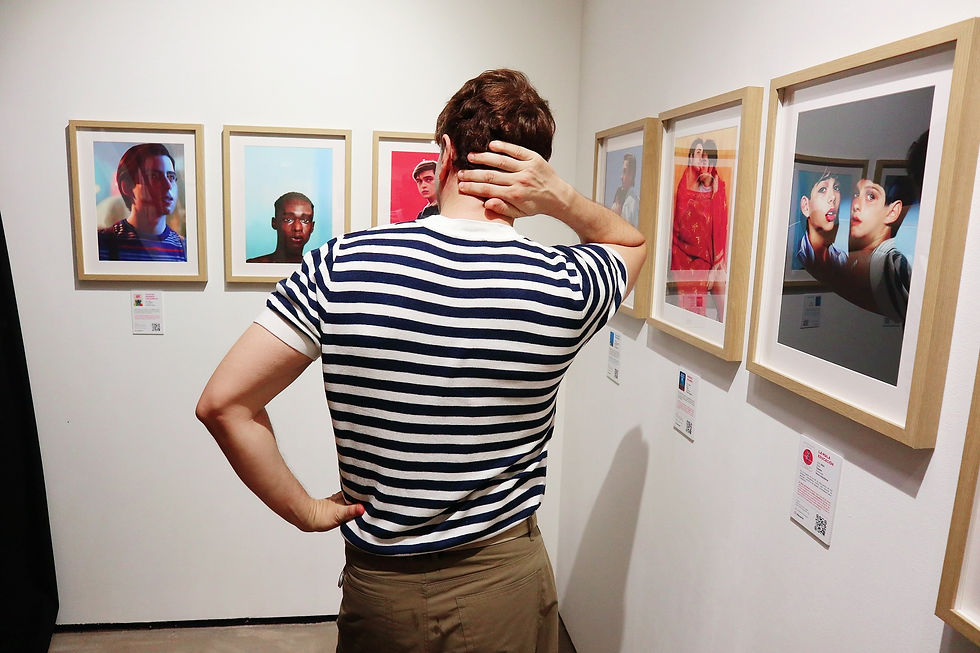
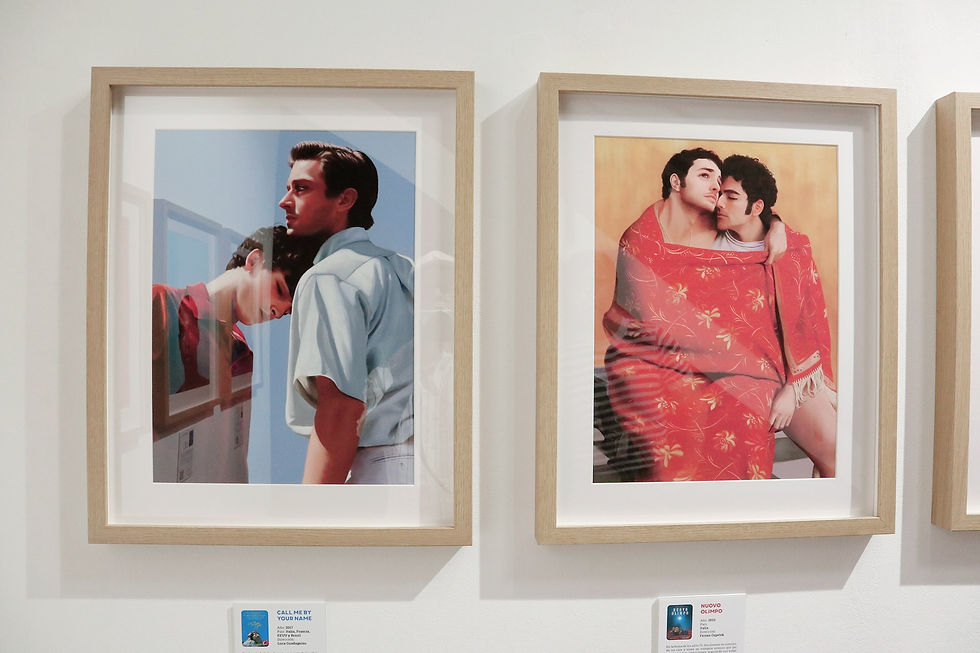
Ufarte reúne diez ilustraciones que revisitan escenas de películas LGTBIQ+ que han acompañado a distintas generaciones. Pero no como homenaje, ni como arqueología cultural, ni como gesto de nostalgia bien intencionada. Las trabaja desde un lugar más honesto y más arriesgado: la memoria afectiva. Ese territorio donde las imágenes no se recuerdan, se sienten. Donde Brokeback Mountain no es una película sino la primera vez que entendiste que el deseo también podía ser paisaje. Donde Moonlight es esa mezcla de vulnerabilidad y fuerza que todavía no has aprendido a nombrar del todo. Donde Call Me by Your Name huele a verano y tiene la textura física de algo que te cambió la piel y que, sin embargo, nunca fue del todo tuyo.
Lo que hace Ufarte en cada pieza es pequeño y exacto: activa un gesto, una luz, un color. No reproduce; evoca. Y en esa diferencia está todo.
Ufarte brings together ten illustrations revisiting scenes from LGBTIQ+ films that have accompanied different generations. But not as tribute, or cultural archaeology, or well-meaning nostalgia. He works from a more honest and more vulnerable place: affective memory. That territory where images aren't remembered — they're felt. Where Brokeback Mountain isn't a film but the first time you understood that desire could also be landscape. Where Moonlight is that mix of vulnerability and strength you still haven't quite learned to name. Where Call Me by Your Name smells like summer and has the physical texture of something that changed your skin and yet was never entirely yours.
What Ufarte does in each piece is small and precise: he activates a gesture, a light, a colour. He doesn't reproduce — he evokes. And everything lives in that difference.


Lo más valioso, quizás, es lo que evita. No hay romanticismo de postal. No hay iconografía del orgullo convertida en objeto decorativo. Lo que propone es otra cosa: recuperar las imágenes que nos formaron y revisarlas desde un presente que ya no pide permiso para existir. Un presente que mira atrás no con melancolía sino con claridad. Con gratitud y también con exigencia.
La Fiambrera acompaña bien esa lectura. No es un templo solemne. Tampoco un escaparate. Es un espacio con escala humana, luz contenida, una proximidad que invita a quedarse cerca de las obras. Algunas ilustraciones parecen escenas domésticas, casi privadas. Otras tienen la contundencia de un fotograma que te atraviesa antes de que hayas podido prepararte. Todas plantean, silenciosa pero insistentemente, la misma pregunta: ¿qué películas te ayudaron a entender quién eras?
No es una pregunta retórica. Es la pregunta.
What's most valuable, perhaps, is what he avoids. There's no postcard romanticism. No pride iconography turned decorative object. What he proposes is something else: recovering the images that shaped us and revisiting them from a present that no longer asks permission to exist. A present that looks back not with melancholy but with clarity. With gratitude, and also with demand.
La Fiambrera suits that reading well. It's not a solemn temple. Not a shopfront either. It's a human-scaled space, with contained light and a closeness that invites you to linger near the works. Some illustrations feel like domestic scenes, almost private. Others carry the force of a frame that hits you before you've had time to prepare. All of them pose, silently but insistently, the same question: what films helped you understand who you were?
It's not a rhetorical question. It's the question.


La selección es amplia en tono y en generación. Aparecen títulos ya sedimentados —Weekend, God's Own Country, La mala educación— junto a otros más recientes que han ensanchado la conversación sobre identidades, cuerpos y afectos. Lo que une todas las piezas es la mirada del artista: honesta, tierna, reivindicativa sin estridencias. Ufarte no idealiza la experiencia queer. La sitúa en lo cotidiano, en lo que sostiene. En lo que, muchas veces, salva.
La exposición forma parte de Muestra•t – MADO 2026, y encaja en ese marco de forma natural, casi inevitable. Porque lo que propone Ufarte es exactamente lo que la cultura queer lleva haciendo desde siempre: construir memoria. Insistir en que nuestras historias importan. Que importan las películas que nos acompañaron cuando aún no sabíamos cómo contarnos. Que importan los gestos que nos hicieron sentir menos solos en un mundo que, con demasiada frecuencia, prefería no vernos.
The selection is wide in tone and generation. Established titles appear — Weekend, God's Own Country, La mala educación — alongside more recent ones that have broadened the conversation about identities, bodies and desire. What unites all the pieces is the artist's gaze: honest, tender, quietly defiant. Ufarte doesn't idealise the queer experience. He places it in the everyday, in what sustains. In what, often, saves.
The exhibition is part of Muestra•t – MADO 2026, and fits that context naturally, almost inevitably. Because what Ufarte proposes is exactly what queer culture has always done: build memory. Insist that our stories matter. That the films that accompanied us when we didn't yet know how to tell ourselves matter. That the gestures that made us feel less alone in a world that, too often, preferred not to see us matter.
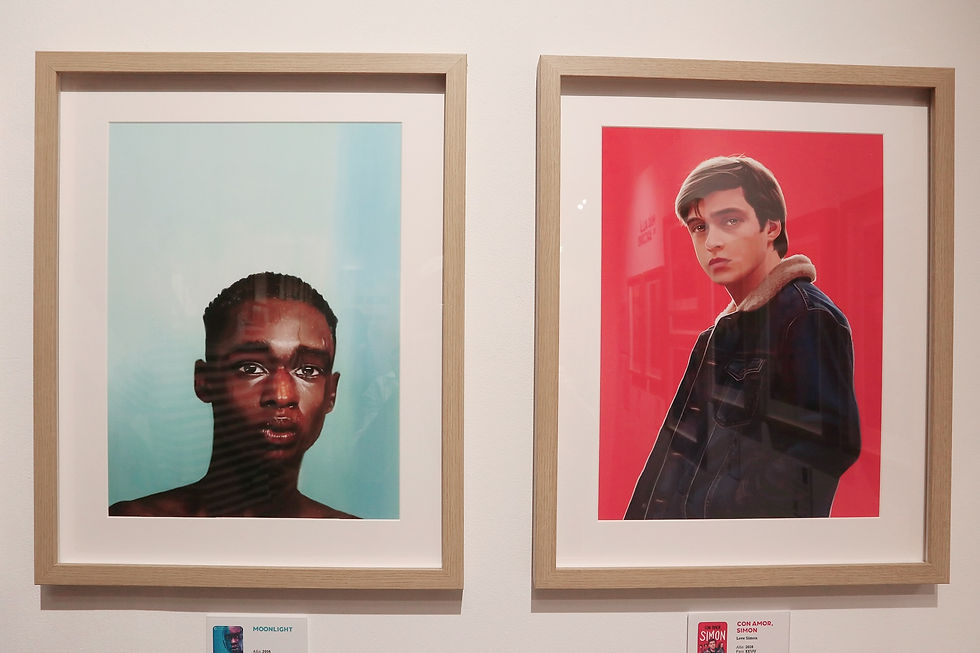

Salir de La Fiambrera después de ver esto tiene algo de tránsito. Caminas por Malasaña, escuchas el pulso del barrio, ves banderas en los balcones, y piensas en cómo el cine, la ilustración y la memoria colectiva construyen comunidad. No de manera abstracta. De manera concreta, imagen a imagen, película a película, tarde a tarde en la que alguien se reconoció en una pantalla y entendió que no estaba solo.
Más allá del arcoíris no es una exposición grandilocuente. Es íntima, precisa, necesaria. Habla desde un lugar que reconoces sin esfuerzo, porque en parte ya lo habitabas. Y eso, en el arte como en la vida, es lo más difícil de conseguir y lo que más tiempo dura.
Leaving La Fiambrera after seeing this has something of a crossing to it. You walk through Malasaña, you hear the pulse of the neighbourhood, you see flags on balconies, and you think about how cinema, illustration and collective memory build community. Not in the abstract. Concretely, image by image, film by film, afternoon by afternoon in which someone recognised themselves on a screen and understood they were not alone.
Beyond the Rainbow is not a grandiose exhibition. It is intimate, precise, necessary. It speaks from a place you recognise without effort, because in some way you already lived there. And that, in art as in life, is the hardest thing to achieve — and the thing that lasts the longest.

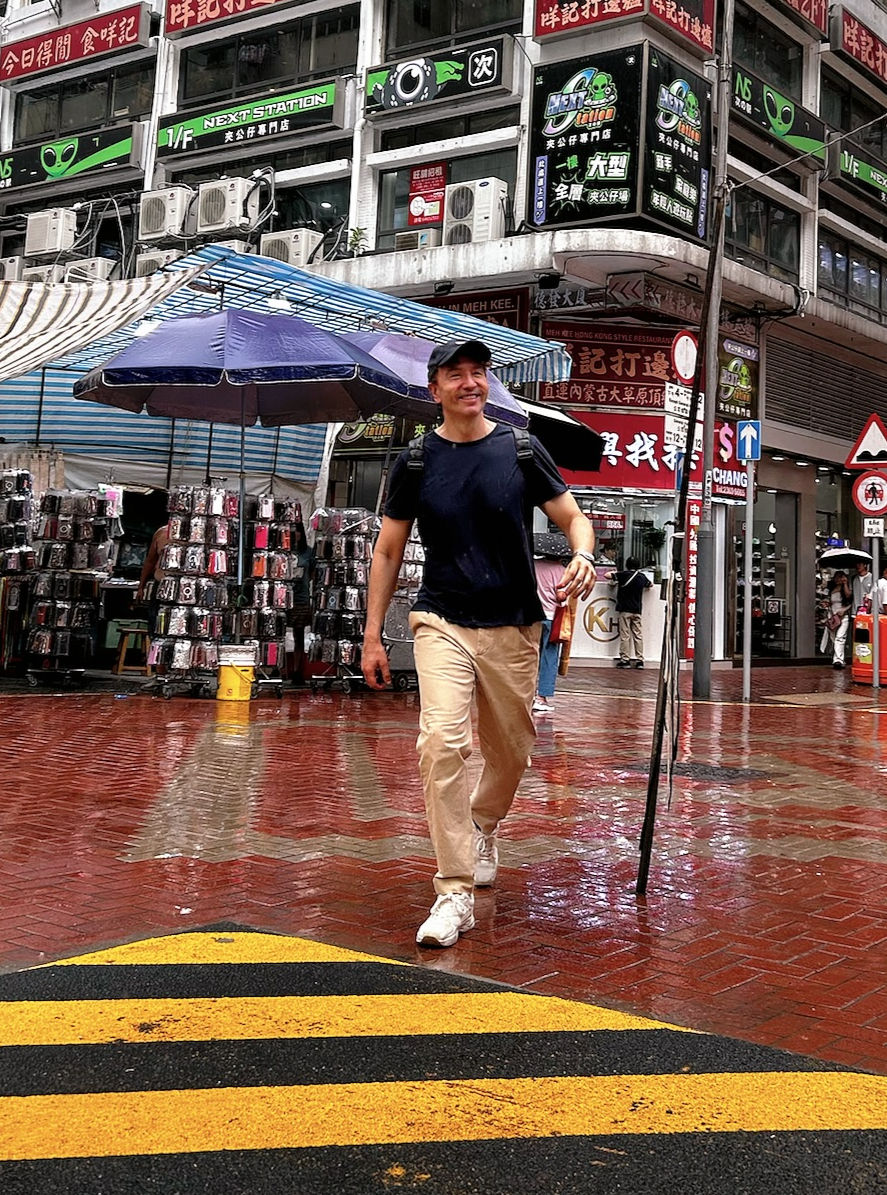
Llevo puesto una camiseta de COS, pantalón de BERLUTI y zapatos de CLARKS
I'm wearing a COS T-shirt, BERLUTI pants and CLARKS shoes




Comentarios