LO QUE REVELAN LAS 400 MALETAS OLVIDADAS EN EL WILLARD, EL PSIQUIÁTRICO MÁS GRANDE DE ESTADOS UNIDOS

Cuando el Willard Psychiatric Center, uno de los centros psiquiátricos más grandes de Estados Unidos, cerró sus puertas en 1995, el edificio quedó en silencio por primera vez en más de un siglo. Sus pasillos, que habían visto dolor, esperanza, miedo y rutina, parecían dormidos. Pero en lo más alto del edificio, detrás de una puerta olvidada del ático, alguien encontró algo que despertó de golpe toda la memoria del lugar: más de 400 maletas cubiertas de polvo, alineadas como si sus dueños fueran a regresar en cualquier momento.
Eran maletas de personas que habían ingresado en Willard entre 1910 y 1960. Personas que, en su mayoría, nunca volvieron a salir. En una época en la que la enfermedad mental se trataba con miedo y desconocimiento, entrar en un psiquiátrico solía significar quedarse allí para siempre. Y esas maletas, cuidadosamente guardadas, eran lo único que quedaba de sus vidas antes del encierro. Esto es lo que revelan las 400 maletas olvidadas en el Willard, el psiquiátrico más grande de estados unidos
When the Willard Psychiatric Center closed its doors in 1995, the building fell silent for the first time in more than a century. Its hallways—witnesses to pain, hope, fear, and routine—seemed to exhale. But high up in the building, behind a forgotten attic door, someone discovered something that awakened all the memories at once: more than 400 dust-covered suitcases, lined up as if their owners might return at any moment.
They belonged to people who had entered Willard between 1910 and 1960. People who, for the most part, never walked out again. In an era when mental illness was met with fear and misunderstanding, entering a psychiatric institution often meant staying there for life. And those suitcases, carefully stored away, were the last traces of lives that had existed before confinement.
Objetos que hablan cuando ya no queda nadie
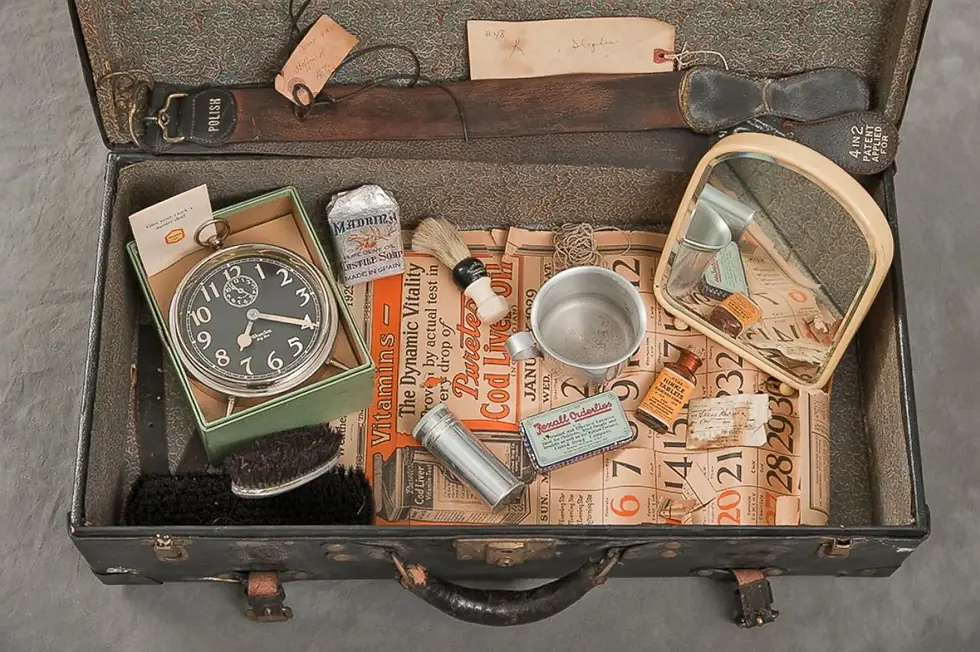
El New York State Museum recibió las maletas y entendió enseguida que no eran simples objetos: eran historias detenidas, biografías comprimidas en cuero, tela y metal. Para darles voz, el museo permitió al fotógrafo Jon Crispin documentar su contenido. Lo que encontró fue tan íntimo que parecía casi una invasión… y al mismo tiempo, un acto de justicia.
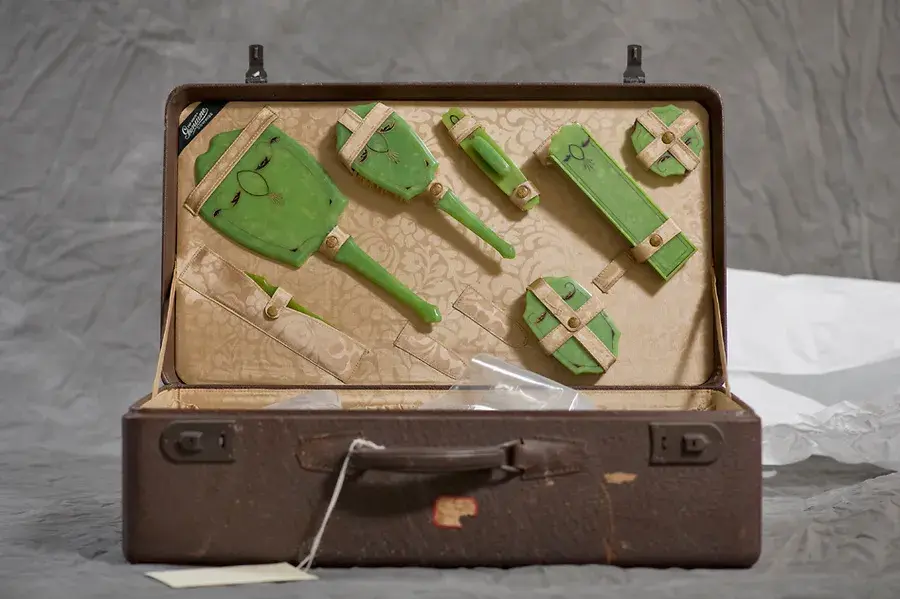
Había maletas casi vacías, como si sus dueños hubieran llegado con lo mínimo. Otras estaban llenas de objetos que revelaban mundos enteros:
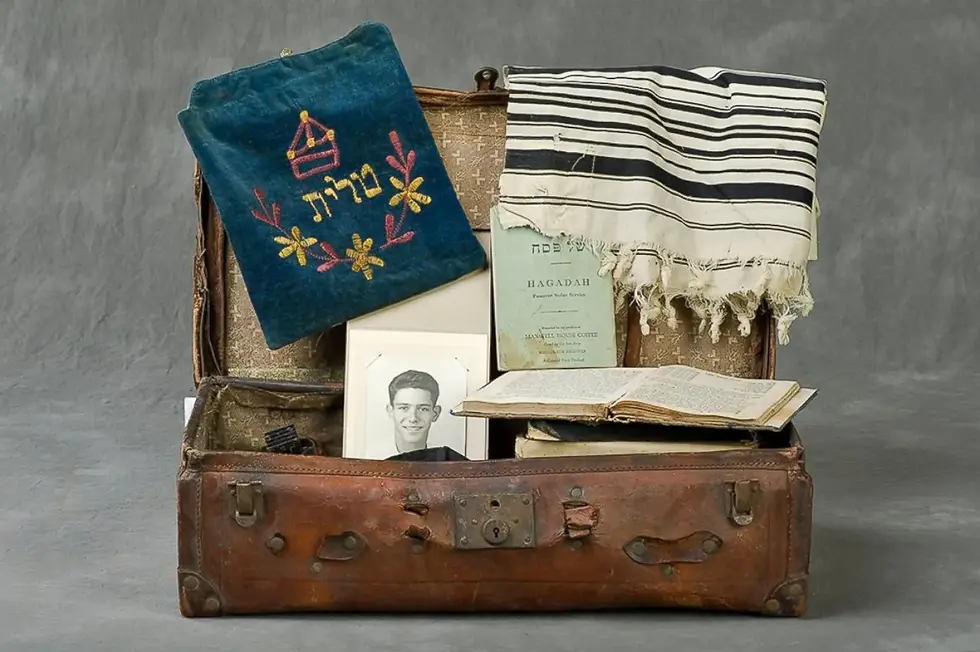
fotografías de familia cuidadosamente envueltas,
cartas que nunca llegaron a enviarse,
herramientas de trabajo,
frascos de medicinas,
bordados a medio terminar,
cuadernos,
ropa doblada con una delicadeza que duele.
Una maleta contenía una pierna ortopédica de madera junto a un par de zapatos. Otra, perteneciente a una exenfermera, guardaba jeringuillas y pequeños viales, como si aún esperara volver a ejercer. Cada objeto parecía decir: “Yo fui alguien antes de llegar aquí.”
Objects that speak when no one else can
The New York State Museum received the suitcases and immediately understood that they were not mere objects. They were frozen stories, biographies compressed into leather, fabric, and metal. To give them a voice, the museum allowed photographer Jon Crispin to document their contents. What he found was so intimate it felt almost intrusive—and at the same time, profoundly necessary.
Some suitcases were nearly empty, as if their owners had arrived with only the essentials. Others were filled with objects that revealed entire worlds:
carefully wrapped family photographs,
letters that were never sent,
work tools,
medicine bottles,
half-finished embroidery,
notebooks,
neatly folded clothing.
One suitcase held a wooden prosthetic leg alongside a pair of shoes. Another, belonging to a former nurse, contained syringes and small vials, as if she still hoped to practice her profession. Every object seemed to whisper: “I was someone before I came here.”

El peso emocional de lo que se deja atrás
Lo más conmovedor de estas maletas no es lo que contienen, sino lo que representan. Cada una es un recordatorio de que esas personas no llegaron a Willard esperando quedarse para siempre. Empacaron sus cosas pensando en un regreso. Guardaron sus mejores prendas, sus recuerdos más queridos, sus herramientas más útiles. Nadie prepara una maleta para un viaje sin retorno.
Pero la realidad de la época era cruel. Los tratamientos eran rudimentarios, el estigma era enorme y la comprensión de la salud mental era mínima. Muchos pacientes murieron allí, sin que nadie reclamara sus pertenencias. Y sin embargo, alguien —algún trabajador anónimo— decidió guardar esas maletas con cuidado, como si supiera que algún día serían importantes.
The emotional weight of what is left behind
What makes these suitcases so moving is not just what they contain, but what they represent. Each one is a reminder that these individuals did not arrive at Willard expecting to stay forever. They packed their belongings believing they would one day return home. They brought their best clothes, their most cherished memories, their most useful tools. No one packs a suitcase for a journey with no return.
But the reality of the time was harsh. Treatments were rudimentary, stigma was overwhelming, and understanding of mental health was minimal. Many patients died there, their belongings never claimed. And yet someone—some anonymous worker—chose to store those suitcases with care, as if knowing they would matter someday.


Un acto de memoria y dignidad
El proyecto de Jon Crispin no es solo una serie de fotografías: es un acto de reparación. Cada imagen devuelve humanidad a personas que fueron reducidas a diagnósticos, números de expediente o simples “casos”. Sus maletas, ahora expuestas en museos y galerías, nos obligan a mirar de frente una parte incómoda de nuestra historia: cómo tratamos a quienes no encajaban, a quienes sufrían, a quienes no podían defenderse.
Algunas familias, al ver las fotografías, han reconocido objetos y han podido reconstruir fragmentos de historias que creían perdidas. Otras han descubierto por primera vez que un antepasado suyo vivió —y murió— en Willard. Las maletas se han convertido en puentes entre generaciones.
An act of memory and dignity
Jon Crispin’s project is more than a collection of photographs; it is an act of restoration. Each image returns humanity to people who had been reduced to diagnoses, case numbers, or institutional records. Their suitcases, now displayed in museums and galleries, force us to confront an uncomfortable part of our history: how society treated those who suffered, those who didn’t fit, those who couldn’t defend themselves.
Some families, upon seeing the photographs, recognized objects and were able to reconstruct fragments of stories they thought were lost. Others discovered for the first time that an ancestor had lived—and died—inside Willard. The suitcases have become bridges between generations.

Lo que nos enseñan estas maletas
Mirar dentro de estas maletas es mirar dentro de nosotros mismos. Nos recuerdan que todos llevamos algo que nos define: un objeto, una carta, una fotografía. Algo que dice quiénes somos cuando las palabras ya no alcanzan.
Las maletas de Willard no son solo reliquias. Son un llamado a la empatía. Una invitación a no olvidar. Una prueba silenciosa de que cada vida, incluso la más marginada, merece ser contada.
What these suitcases teach us
To look inside these suitcases is to look inside ourselves. They remind us that everyone carries something that defines them: an object, a letter, a photograph. Something that says who we are when words are no longer enough.
The Willard suitcases are not just historical artifacts. They are a call for empathy. An invitation not to forget. A silent testament that every life—even the most marginalized—deserves to be remembered.


Comentarios