DAVID DELFÍN VUELVE A MADRID, UN PASEO ÍNTIMO POR SU UNIVERSO EN EL MUSEO DEL TRAJE

Entrar estos días al Museo del Traje es como abrir una caja que alguien dejó a medio hacer durante una mudanza: cajas apiladas, prendas que parecen recién desembaladas y esa sensación de tránsito que te obliga a moverte despacio, como si estuvieras entrando en la cabeza de alguien. Y en cierto modo, sí: estás entrando en la de David Delfín.
La exposición David Delfín. En tránsito reúne entre diez y veinte piezas —según el día y el montaje— procedentes de la Fundació Antoni de Montpalau y del propio museo, incluyendo algunos conjuntos icónicos y hasta el vestido que llevó Letizia Ortiz cuando aún era princesa. Todo está colocado en un espacio construido con cajas profesionales de transporte, un guiño directo al desfile Déménagement (2007–2008), donde Delfín reflexionaba sobre el movimiento, el cambio y ese vértigo de estar siempre entre un lugar y otro.
Celebremos que David Delfín vuelve a Madrid, un paseo íntimo por su universo en el Museo del Traje
Walking into the Museo del Traje these days feels like opening a box someone left half-packed during a move: stacked crates, garments that look freshly unpacked, and that strange sense of being “in between” that makes you slow down, as if you were stepping into someone’s mind. And in a way, you are—David Delfín’s.
The exhibition David Delfín. In Transit brings together between ten and twenty pieces—depending on the day and the installation—on loan from the Fundació Antoni de Montpalau and the museum itself. You’ll find iconic looks, accessories, and even the dress worn by Letizia Ortiz back when she was still a princess. Everything is displayed on professional transport crates, a direct nod to Déménagement (2007–2008), the runway show where Delfín reflected on movement, change, and that dizzying feeling of always being between one place and the next.


🧵 Un diseñador que nunca se quedó quieto
Lo bonito de esta muestra es que no intenta “explicar” a David Delfín, sino dejar que su obra hable sola. Hay vestidos, abrigos, conjuntos, complementos y objetos que formaban parte de su proceso creativo. Y, como siempre en él, la moda aparece mezclada con arte, con referencias a The Lovers de Magritte o al universo conceptual de Joseph Beuys.
Delfín jugaba con la dualidad, con la enfermedad, con el blanco y negro como si fueran pulsos vitales. En una de las piezas, las vendas se convierten en un gesto estético y emocional a la vez, recordándonos que su obra siempre fue un diálogo entre fragilidad y fuerza.
🧵 A designer who never stood still
What’s beautiful about this exhibition is that it doesn’t try to “explain” David Delfín. It lets the work speak for itself. There are dresses, coats, full looks, accessories, and objects from his creative process. And, as always with him, fashion blends with art—references to Magritte’s The Lovers, to Joseph Beuys, to that conceptual universe where clothing becomes a language.
Delfín played with duality, with illness, with black and white as if they were vital signs. In one of the pieces, bandages become both an aesthetic gesture and an emotional one, reminding you that his work was always a dialogue between fragility and strength.


🎥 El documental que acompaña la experiencia
La exposición viene acompañada de la proyección del documental David Delfín. Muestra tu herida, construido a partir de más de 80 horas de material inédito de RTVE y de su entorno personal. Es un retrato íntimo: su genialidad, su vulnerabilidad, su duelo, su humor, su forma de mirar el mundo. Se proyecta en el salón de actos del museo y la entrada es libre hasta completar aforo.
Ver la exposición y luego el documental es casi como escuchar una conversación entre dos versiones del mismo David: el que creaba y el que se explicaba.
🎥 A documentary that completes the experience
The exhibition is accompanied by the screening of the documentary David Delfín. Show Your Wound, built from more than 80 hours of previously unseen footage from RTVE and his inner circle. It’s an intimate portrait: his brilliance, his vulnerability, his grief, his humor, his way of looking at the world. It’s shown in the museum’s auditorium, and admission is free until seats fill up.
Seeing the exhibition and then the documentary feels like listening to two versions of David talking to each other: the one who created and the one who explained himself.

👟 Piezas que cuentan historias
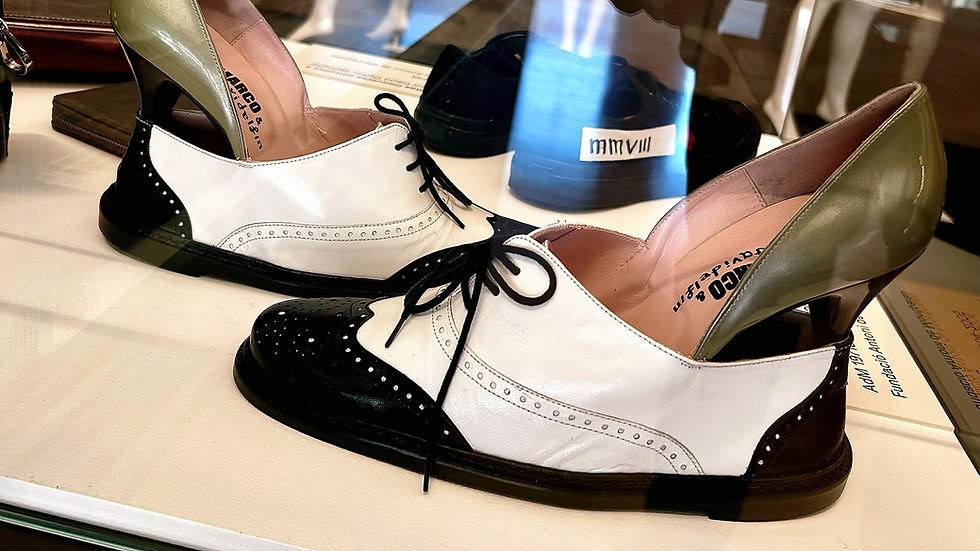
Entre las prendas expuestas hay zapatos surrealistas, un traje de punto con flor de lis, diseños para Barbie y hasta un frac de gabardina que él mismo llevó en un shooting en Turquía. Cada pieza parece tener una anécdota detrás, una pequeña grieta por la que asomarse a su mundo.
Y aunque la muestra es relativamente pequeña, tiene algo muy Delfín: es directa, honesta, sin artificios innecesarios. Como si él mismo hubiera dicho: “No hace falta más”.
👟 Pieces that tell stories
Among the pieces on display you’ll find surrealist shoes, a knit suit with a fleur-de-lis, designs for Barbie, and even a trench-coat tailcoat he wore during a shoot in Turkey. Each piece seems to carry a story, a small crack through which you can peek into his world.
And even though the exhibition is relatively small, it feels very Delfín: direct, honest, stripped of unnecessary artifice. As if he himself had said, “You don’t need more.”


🚶♂️ Un paseo que se siente personal
Quizá porque David Delfín murió demasiado pronto, o quizá porque su obra siempre tuvo algo de confesión, recorrer esta exposición se siente como visitar a un amigo que ya no está pero dejó su habitación tal cual. Hay nostalgia, sí, pero también una energía viva, casi eléctrica, que te recuerda por qué su figura sigue siendo tan influyente en la moda española contemporánea.
Sales del museo con la sensación de haber estado en movimiento, igual que él: transitando.
🚶♂️ A walk that feels personal
Maybe it’s because David Delfín died too soon, or maybe because his work always had something confessional about it, but walking through this exhibition feels like visiting a friend who’s no longer here but left his room exactly as it was. There’s nostalgia, yes, but also a kind of living, electric energy that reminds you why he remains so influential in contemporary Spanish fashion.
You leave the museum feeling like you’ve been in motion too—transiting, just like him.-

Todo lo que llevo es de BOTTEGA VENETA menos los zapatos quye son se BALENCIAGA
All my clothing is from BOTTEGA VENETA, except for the shoes, which are BALENCIAGA.


Comentarios