“LA COMARCA” DE LOS HOBBITS EXISTE, ESTÁ EN NUEVA ZELANDA Y SE LLAMA HOBBITON

Nueva Zelanda es un país que se recuerda por muchas cosas: sus paisajes naturales que parecen sacados de otro planeta, la cultura maorí que sostiene una identidad profunda, el rugby que allí es casi una forma de vida… y, por supuesto, por ser el escenario donde se rodó la trilogía de El Señor de los Anillos y El Hobbit.
Esa mezcla de naturaleza, tradición y cine convierte al país en un territorio que uno no solo visita, lo atraviesa.
El camino en coche hacia Hobbiton, la ciudad de los hobbits, ya prepara el ánimo hacia lo que vas a vivir. Conduces entre colinas suaves, onduladas, cubiertas de ovejas y vacas que parecen colocadas allí por alguien obsesionado con lo idílico. Hay algo profundamente pastoral en ese paisaje, una calma que se te va metiendo dentro de ti y que, curiosamente, perdurará durante todo el viaje por Nueva Zelanda.
Eso es lo que se siente cuando vas llegando a Hobbiton, la ciudad donde, según la película de Peter Jackson, habitaban los Hobbits y donde todo te transporta al maravilloso mundo de Tolkien.
New Zealand is a country remembered for many things: its natural landscapes that look almost otherworldly, the Māori culture that carries a deep and proud identity, rugby—which there is practically a way of life—and, of course, for being the filming location of The Lord of the Rings and The Hobbit. That mix of nature, tradition, and cinema turns the country into a place you don’t just visit—you move through it.
The drive to Hobbiton sets the tone immediately. You travel through soft, rolling hills dotted with sheep and cows that look as if someone obsessed with idyllic scenery placed them there on purpose. There’s something deeply pastoral about that landscape, an old calm you can feel even from the car. And it makes perfect sense that Peter Jackson discovered this area from a helicopter: from above, the hills look like a world apart, a place that had been waiting to become the Shire.


Tiene sentido que Peter Jackson descubriera esta zona en helicóptero. Desde arriba, las colinas parecen un mundo aparte, un lugar que ya estaba esperando convertirse en la Comarca: colores verdes imposibles, ovejas pastando por doquier y esas colinas onduladas que parecen sacadas de un cuadro. Con esa perspectiva, llegar a Hobbiton se siente casi como entrar en un recuerdo.
El tour comienza con un autobús que te deja en lo alto de una colina, y desde ahí… ¡zas! La vista es de infarto. Ahí abajo, con sus tejados de paja y sus puertas redondas de colores, están las casas de los hobbits que, aunque parezcan de juguete, son de verdad. Y sí, son más pequeños de lo que imaginas (a no ser que midas como un hobbit, claro). Pero el detalle es tan brutal que hasta la ropa tendida en las cuerdas o los pequeños huertos de verduras te hacen creer que Bilbo podría asomar la cabeza en cualquier momento para invitarte a un segundo desayuno. Todo está pensado para que la ficción respire.
It makes sense that Peter Jackson discovered this area from a helicopter. From above, the hills seem like a world apart, a place that was already waiting to become the Region: impossible green colors, sheep grazing everywhere and those rolling hills that seem to be taken out of a painting. With that perspective, getting to Hobbiton feels almost like entering a memory.
The tour begins with a bus that leaves you at the top of a hill, and from there... zas! The view is heartbreaking. Down there, with their thatched roofs and colorful round doors, are the hobbit houses that, although they look like toys, are real. And yes, they are smaller than you imagine (unless you are like a hobbit, of course). But the detail is so brutal that even the clothes hanging out on the ropes or the small vegetable gardens make you believe that Bilbo could stick his head out at any time to invite you to a second breakfast. Everything is designed so that fiction breathes.


El tour está lleno de anecdotas de la película que nadie te ha contado antes y que te dejan con la boca abierta. Cotilleos de los actores, cómo re rodaron las escenas para engañar al espectador con al estatura de los hobbits y una curiosidad que pocos saben: el set no se construyó pensando en que duraría. Cuando Peter Jackson rodó la primera trilogía, todo era provisional. Los hobbit-holes eran fachadas de madera y poliestireno, y las colinas se pintaron para que lucieran más verdes en cámara. De hecho, cuando terminó el rodaje de El Señor de los Anillos en 1999, la finca volvió a ser lo que siempre fue: una granja de ovejas. Los decorados se desmontaron y la tierra recuperó su uso original. Nadie imaginaba que, años después, aquello se convertiría en un imán de turistas.
Pero entonces llegó El Hobbit. La productora necesitaba reconstruir Hobbiton, pero esta vez con una diferencia: los decorados debían ser permanentes. Así que, entre 2009 y 2010, se levantó de nuevo todo el pueblo, pero esta vez con materiales duraderos. Los hobbit-holes pasaron de ser fachadas a tener estructura interna, y se plantaron árboles y jardines de verdad. Y ahí empezó la historia moderna de Hobbiton.
The tour is full of anecdotes from the movie that no one has told you before and that leave you with your mouth open. Gossip of the actors, how they re-shot the scenes to deceive the viewer with the stature of the hobbits and a curiosity that few know: the set was not built thinking that it would last. When Peter Jackson shot the first trilogy, everything was provisional. The hobbit-holes were facades of wood and polystyrene, and the hills were painted to make them look greener on camera. In fact, when the filming of The Lord of the Rings ended in 1999, the farm returned to what it always was: a sheep farm. The decorations were dismantled and the land recovered its original use. No one imagined that, years later, that would become a tourist magnet.
But then The Hobbit arrived. The production company needed to rebuild Hobbiton, but this time with one difference: the sets had to be permanent. So, between 2009 and 2010, the whole town rose again, but this time with durable materials. The hobbit-holes went from being facades to having an internal structure, and real trees and gardens were planted. And that's where the modern story of Hobbiton began.



Y entonces llegamos a la casa de Bilbo.
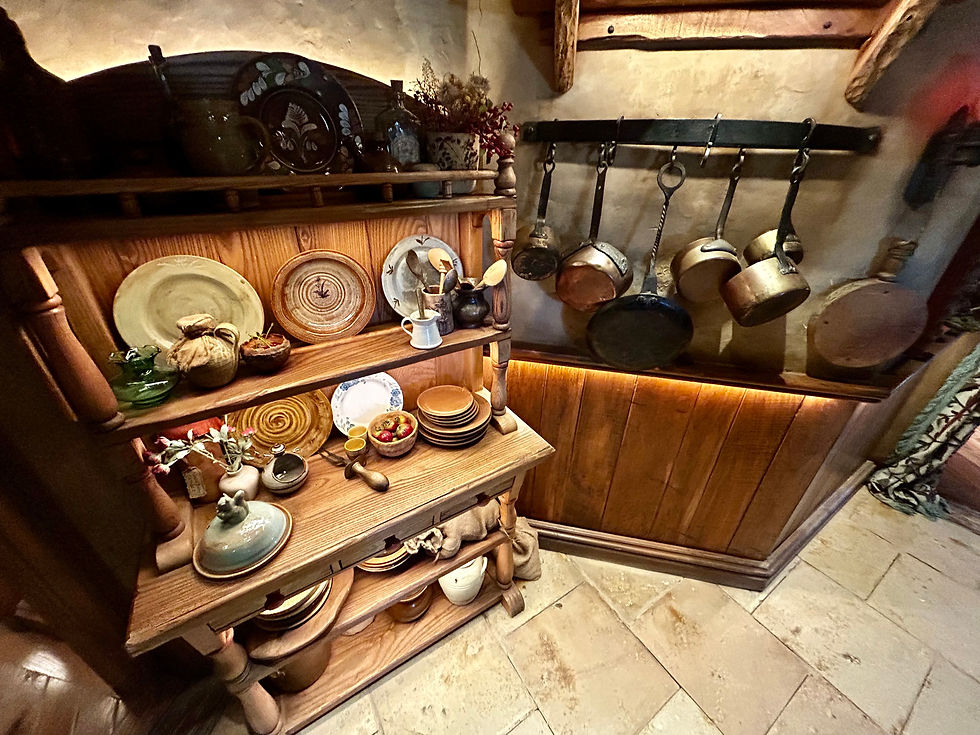
La famosa puerta verde. Ese círculo perfecto que todos hemos visto mil veces, pero que en persona tiene una presencia distinta. No es solo un icono del cine; es un umbral emocional. Y lo mejor: se puede entrar. Cruzar esa puerta es un pequeño golpe de realidad y fantasía mezcladas. El interior es cálido, de madera, lleno de detalles que parecen recién usados: mapas, libros, vajillas, pequeñas notas, objetos que cuentan historias sin necesidad de explicarlas.
Dentro, la nostalgia se vuelve más íntima. No estás imaginando la vida hobbit desde fuera; la estás respirando. Hay algo profundamente evocador en ese espacio: la sensación de hogar, de rutina, de una vida tranquila que nunca existió y aun así se siente cercana. Es fácil imaginar a Bilbo escribiendo en la mesa, a Frodo mirando por la ventana, a la casa vibrando con una calma que pertenece más a la memoria que a la ficción.
El guía habla, cuenta anécdotas del rodaje, pero el lugar te roba la atención. Las ventanas diminutas, los huertos que parecen cultivados por manos distintas, la ropa tendida como si alguien fuera a recogerla en cualquier momento. Hobbiton está construido para que la imaginación complete lo que falta. Y lo hace con una facilidad sorprendente.
And then you reach Bilbo’s house.
The famous green door. That perfect circle everyone has seen a thousand times, but which in person has a different kind of presence. It’s not just a cinematic icon; it’s an emotional threshold. And the best part: you can go inside. Crossing that door is a small collision between reality and fantasy. The interior is warm, wooden, filled with details that feel freshly used—maps, books, dishes, small notes, objects that tell stories without needing to explain them.
Inside, the nostalgia becomes more intimate. You’re not imagining hobbit life from the outside; you’re breathing it. There’s something deeply evocative about that space: the sense of home, of routine, of a quiet life that never existed and yet feels strangely familiar. It’s easy to picture Bilbo writing at the table, Frodo looking out the window, the house humming with a calm that belongs more to memory than to fiction.
The guide talks, shares filming anecdotes, but the place steals your attention. The tiny windows, the gardens that look tended by different hands, the clothes hanging as if someone were about to collect them. Hobbiton is built so your imagination fills in what’s missing—and it does so effortlessly.


La visita culmina en The Green Dragon. La taberna tiene esa luz cálida que recuerda a las tardes largas, a las conversaciones que se quedan flotando en el aire. Te sirven una cerveza artesanal y, por un momento, todo parece más sencillo. Como si el mundo fuera más pequeño, más amable, más lento.
Cuando salí de Hobbiton, tuve la sensación de haber estado en un lugar que no solo recrea una historia, sino que la guarda. Un sitio que nació de la ficción, se convirtió en paisaje y ahora vive como memoria compartida. Una experiencia única, sí, pero también un recordatorio de que hay lugares que no solo se visitan: se sienten.
Así que ya lo sabes; “la comarca” de los hobbits existe, está en Nueva Zelanda y se llama Hobbiton.
The visit ends at The Green Dragon. The inn has that warm light that recalls long afternoons and conversations that linger in the air. They serve you a craft beer and, for a moment, everything feels simpler. As if the world were smaller, kinder, slower.
When I left Hobbiton, I felt I had been in a place that doesn’t just recreate a story—it keeps it. A site born from fiction, turned into landscape, and now living as shared memory. A unique experience, yes. But also a reminder that some places aren’t just visited—they’re felt.
And Hobbiton, with its open green door and luminous quiet, is one of them.

LLevo puesta una cazadora de pana de HUGO BOSS, pantalones de BALENCIAGA, jersey blanco de DAN JOHN y zapatos de VILLASEÑOR
I'm wearing a HUGO BOSS corduroy jacket, BALENCIAGA trousers, a white DAN JOHN jumper, and VILLASEÑOR shoes.


Comentarios